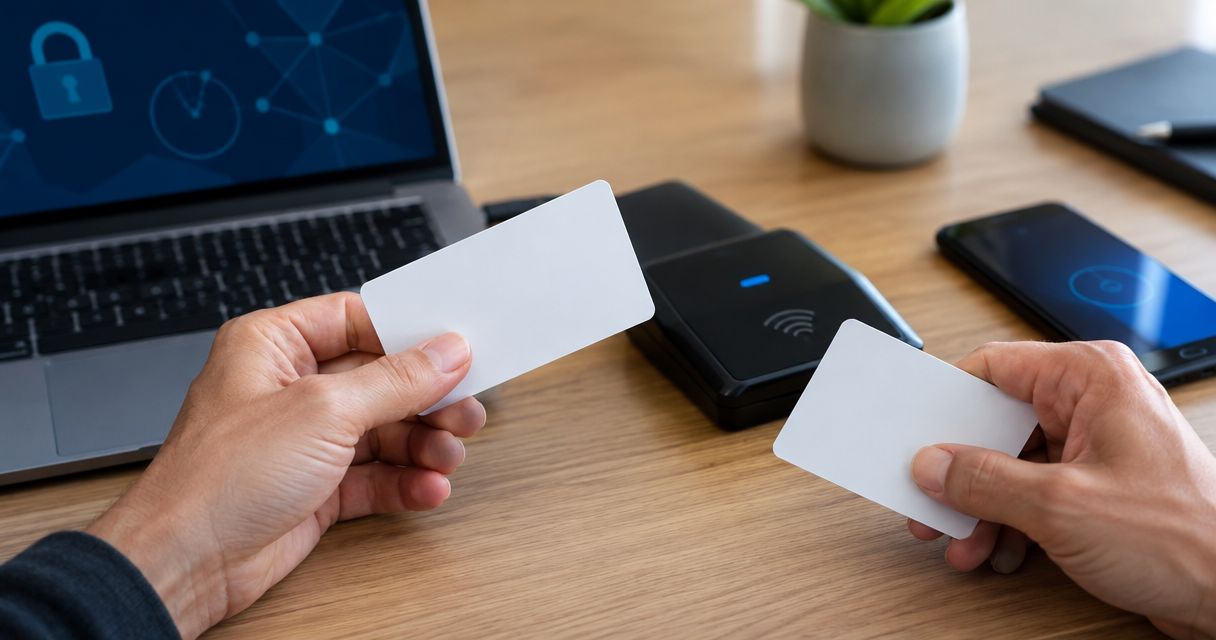
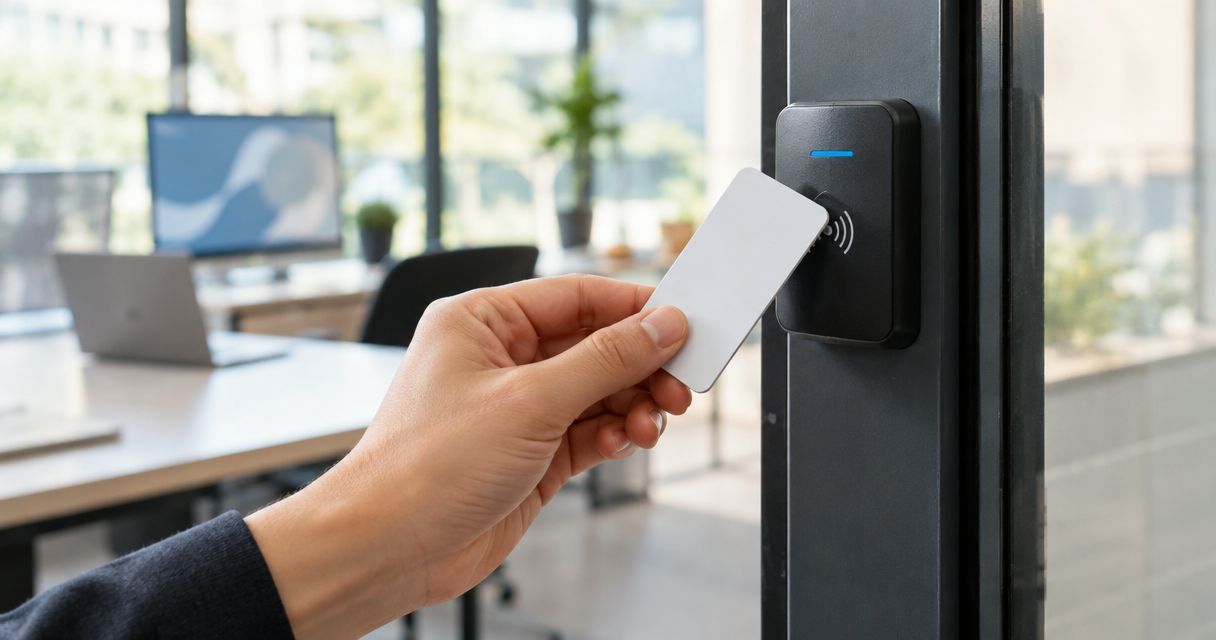
The 125kHz RFID card is the most common access card in Kenyan offices, apartments, schools and gyms. It is cheap, simple and works with most entry-level readers. This guide covers what the card does, where it fits, and where it falls short.
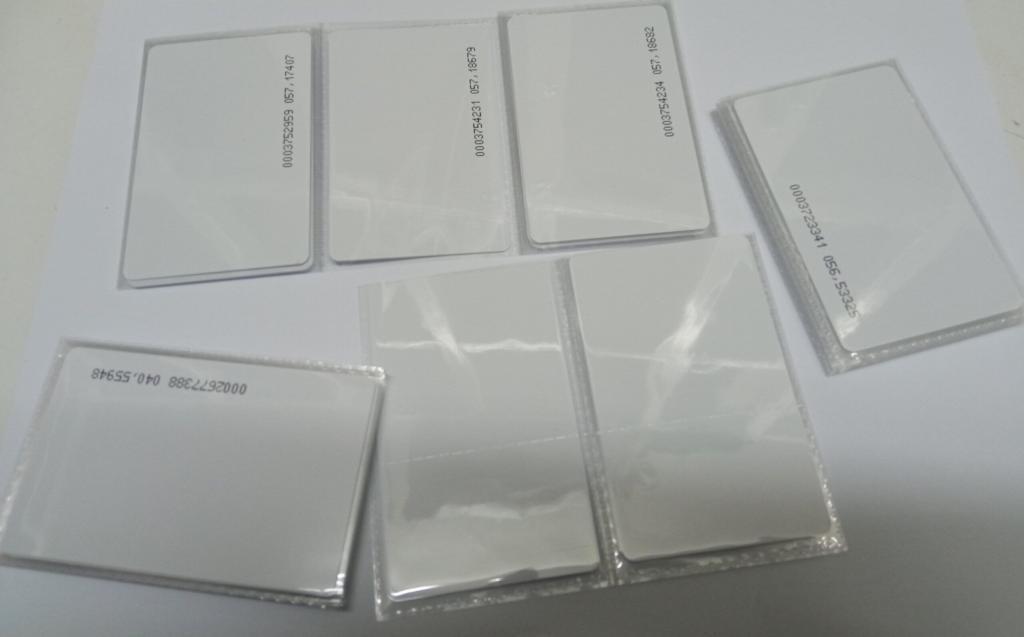
What is a 125kHz RFID card?
It is a low-frequency proximity card, usually built on the EM4100 standard. Each card carries a unique ID number written at the factory. When you hold the card near a reader, the reader powers the chip, reads the number and checks it against the list of allowed users. The 125kHz RFID Proximity Cards sold by Patsec are of this type.
Features
- Frequency: 125kHz, low frequency
- Standard: EM4100, read-only
- Unique ID number fixed at the factory
- Reading distance of a few centimetres, depending on the reader
- No battery: the reader powers the card
- Credit-card-sized PVC that fits a wallet or lanyard holder
Pros
- Low cost. It is the cheapest card type, which matters when you issue hundreds.
- Wide compatibility. Most standalone keypads and many biometric terminals read 125kHz cards as standard.
- Simple to manage. There is nothing to program on the card. You enrol the number on the reader and it works.
- Durable. There are no moving parts or batteries, so cards last for years.
Cons
- Easy to copy. The ID is sent without encryption, so a cheap handheld copier can clone a card in seconds.
- Read-only. The card cannot store extra data such as a balance or user details.
- Not NFC. Phones cannot read it, and it does not work on 13.56MHz or MIFARE readers.
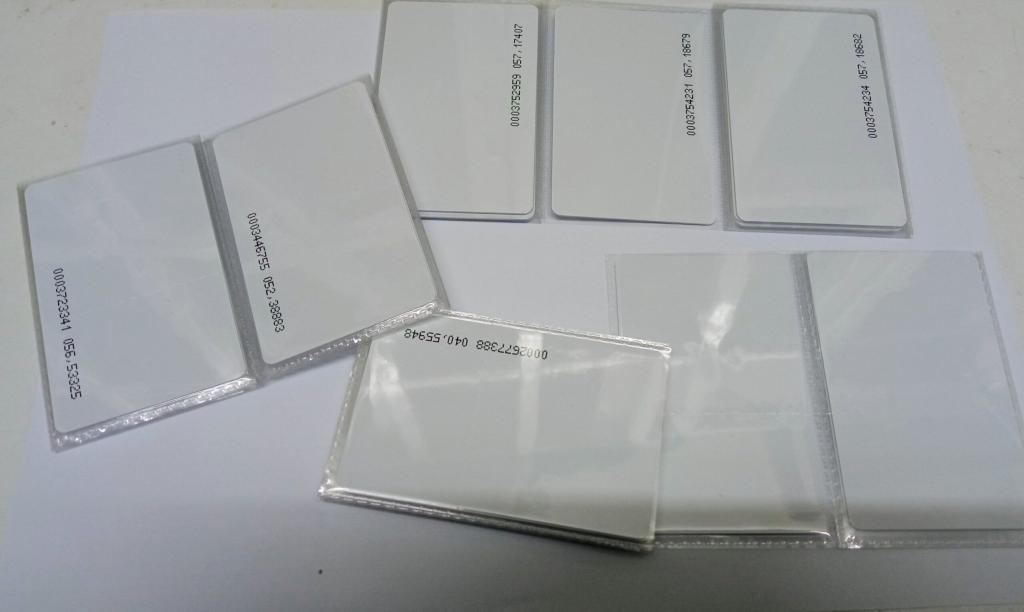
When to choose it
Choose 125kHz cards for time attendance and for doors where convenience matters more than high security: staff entrances, apartment gates, gyms and schools. For server rooms, cash offices or anywhere a copied card would be a serious problem, use an encrypted 13.56MHz card or add a PIN or fingerprint.
Before you buy, confirm that your reader supports 125kHz EM4100. You can order 125kHz RFID Proximity Cards from the Patsec store.