People spend most of their electric fence budget on the energizer and most of their attention on the wire. The posts and insulators get the least thought, and they are where most fence faults start. A cracked insulator or a leaning corner post will drain a fence that a good energizer could otherwise run for years.
What each part does
- Posts hold the wires at the right height and spacing.
- Corner and end posts take the tension of the whole run.
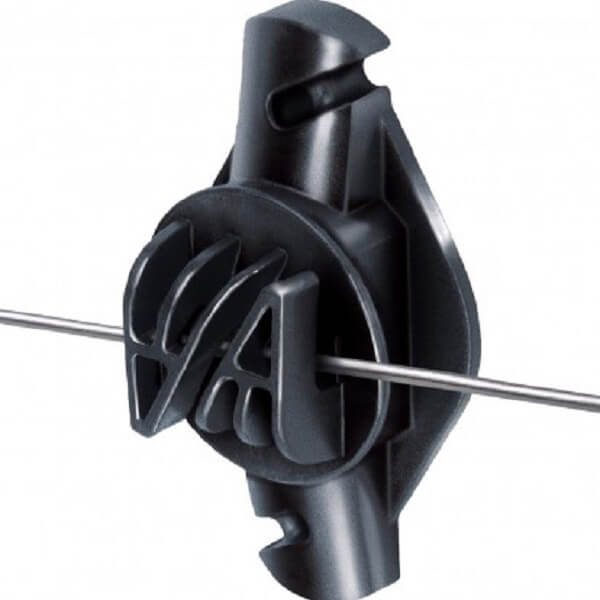
- Insulators hold the live wire while keeping it electrically separate from the post, so the pulse stays on the wire instead of leaking to earth.
W posts
W posts are the standard intermediate post for wall-top and free-standing security fences. They are steel posts supplied with the insulators already fixed at set intervals, which saves fitting each insulator by hand and keeps the strand spacing even from one post to the next.
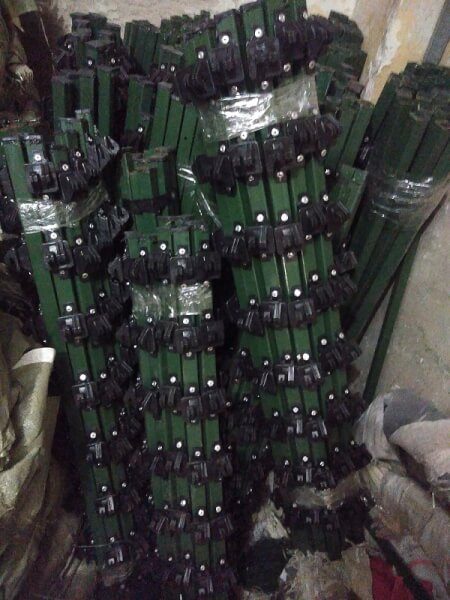
Spacing: we recommend one W post every 3 metres. Wider spacing saves a few posts but lets the wires sag, and sagging wires touch each other or the wall and short the fence.
Corner posts
Every strand of wire pulls on the post where the run ends or changes direction. Corner and end posts are heavier than intermediate posts for that reason, and they must be fixed firmly. If a corner post moves, every wire on that run loses tension at once.
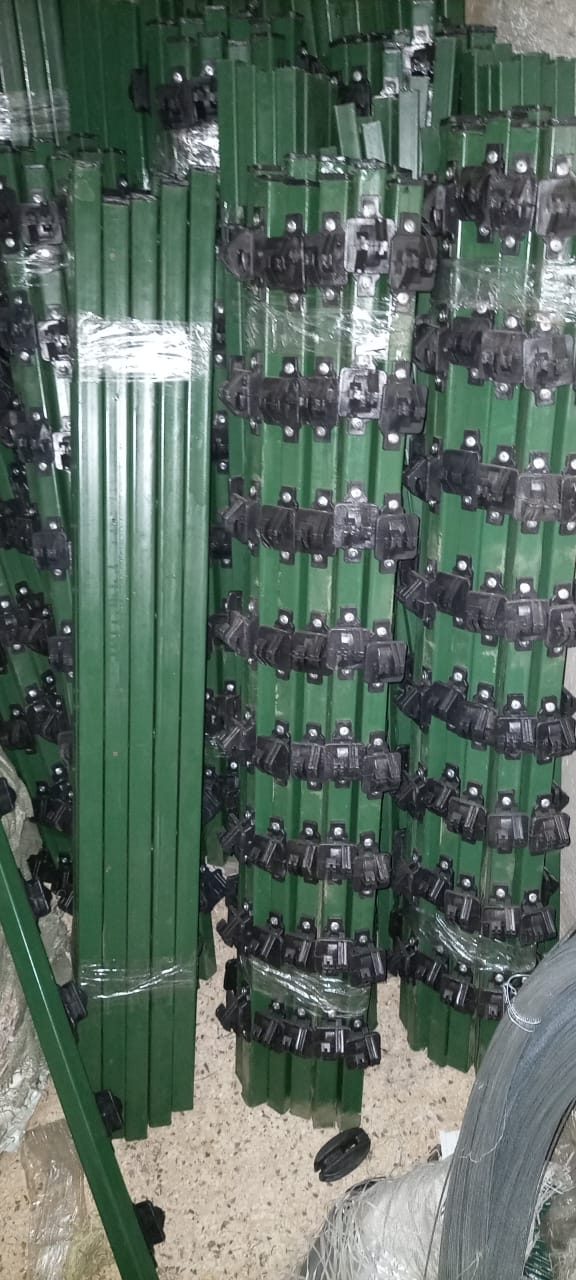
Use a corner post at every change of direction, at both ends of the fence, and on each side of a gate.
Insulators
An insulator has one job, and it has to do it in full sun and rain for years. Look for three things:
- UV-stable material. Cheap plastic goes brittle in the sun, cracks, and lets the pulse track to the post.
- A long leakage path. Ribs and shields on the body make it harder for current to creep across a wet, dusty surface.
- A secure wire seat. The wire should clip in firmly but still be able to slide when the fence is tensioned.
Common mistakes
- Stretching the post spacing beyond 3 metres to save money.
- Using an ordinary post at a corner. It will lean within months.
- Mixing old and new insulators. One cracked insulator can pull the whole fence voltage down.
- Poor earthing. Good posts and insulators cannot make up for it. Use copper earth rods.
How many do you need?
Divide your perimeter in metres by 3 for the number of W posts, then add a corner post for every corner, end and gate side. The electric fence cost calculator does this for you and adds the wire, energizer and earth rods.
W posts, corner posts and insulators are stocked in the electric fencing section of Patsec Security Store.