An electric fence is a long run of wire raised off the ground, which makes it a very good lightning collector. A strike on the fence, or even near it, sends a surge down the wire towards the most expensive part of the system: the energizer. Lightning damage is one of the most common reasons energizers fail. This guide explains how to protect one.
How lightning gets to the energizer
There are two routes. The first is along the fence line itself, from a direct or nearby strike. The second is through the mains supply, when a surge arrives on the power line. A fence needs protection on both sides.
Lightning diverters: protecting the fence side
A lightning diverter is fitted on the live fence wire between the fence and the energizer. It gives a surge an easier path to earth than the path through the energizer.
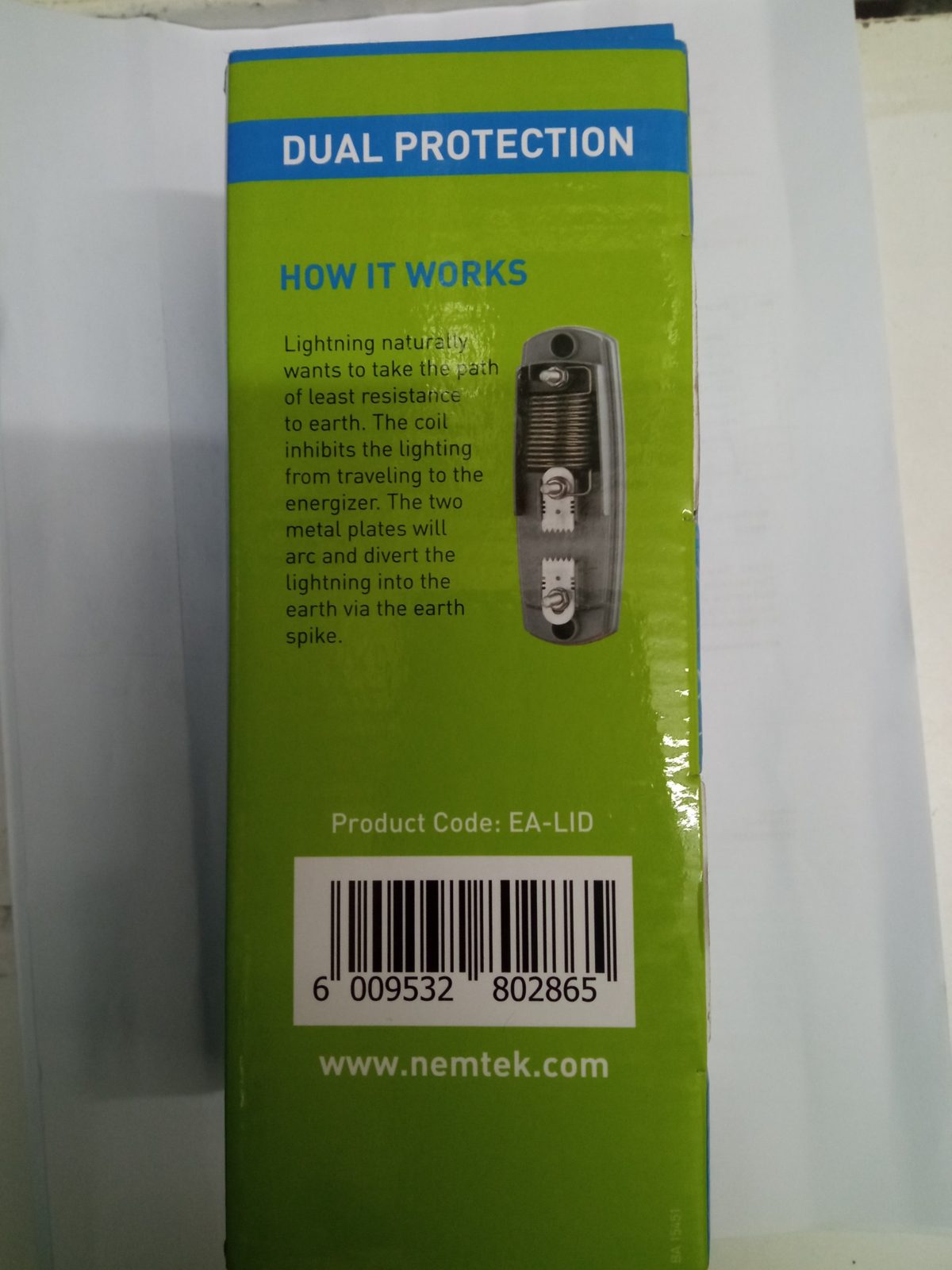
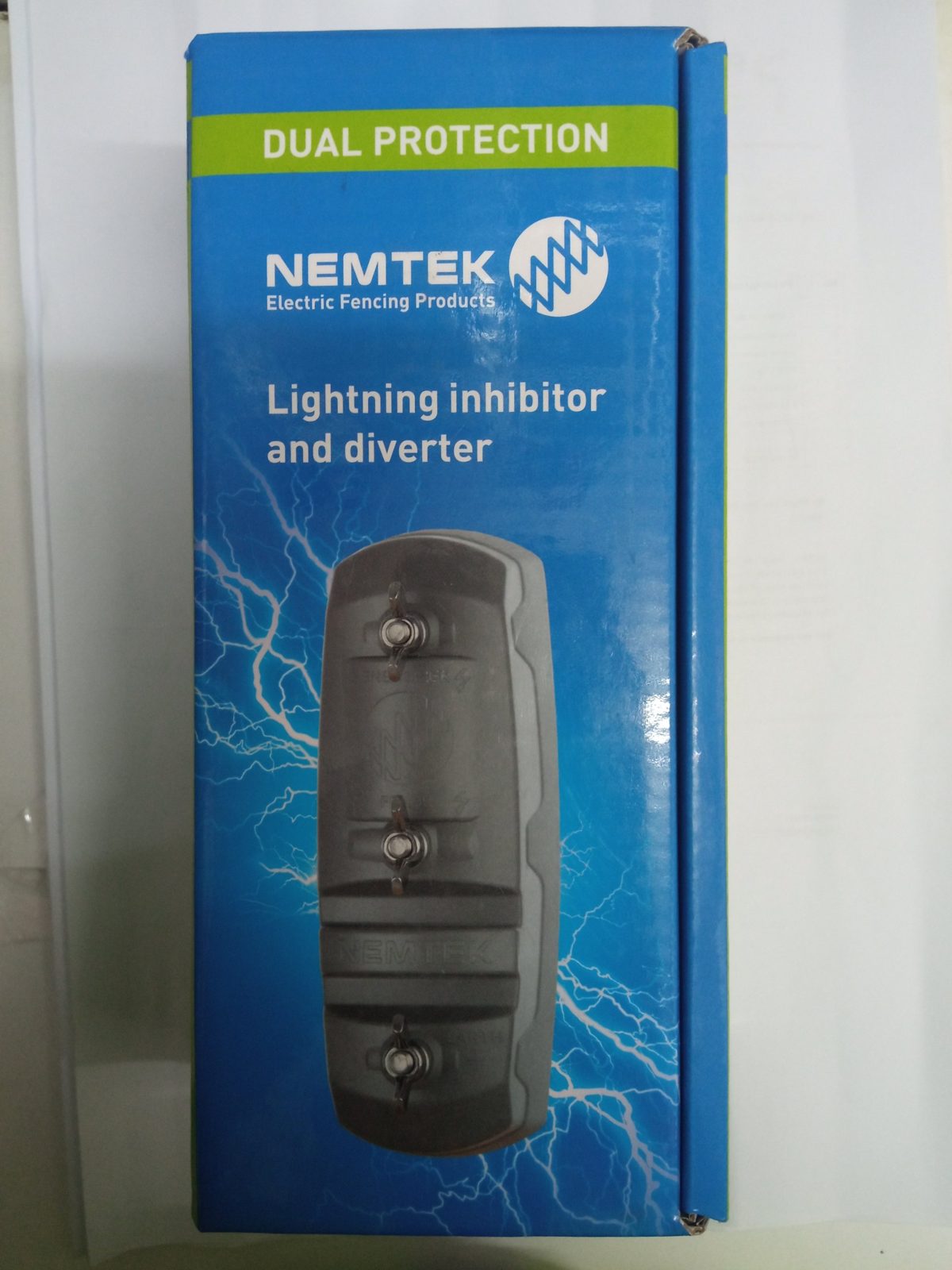
The Nemtek lightning inhibitor and diverter does this in two stages, which is why the box says “dual protection”:
- The coil (inhibitor) resists the fast-rising surge and slows it from travelling on to the energizer.
- The two metal plates (diverter) sit a small gap apart. The surge arcs across the gap and is carried into the ground through an earth spike.
Under normal conditions the fence pulse is not strong enough to jump the gap, so the fence works as usual.
Zinc oxide arresters
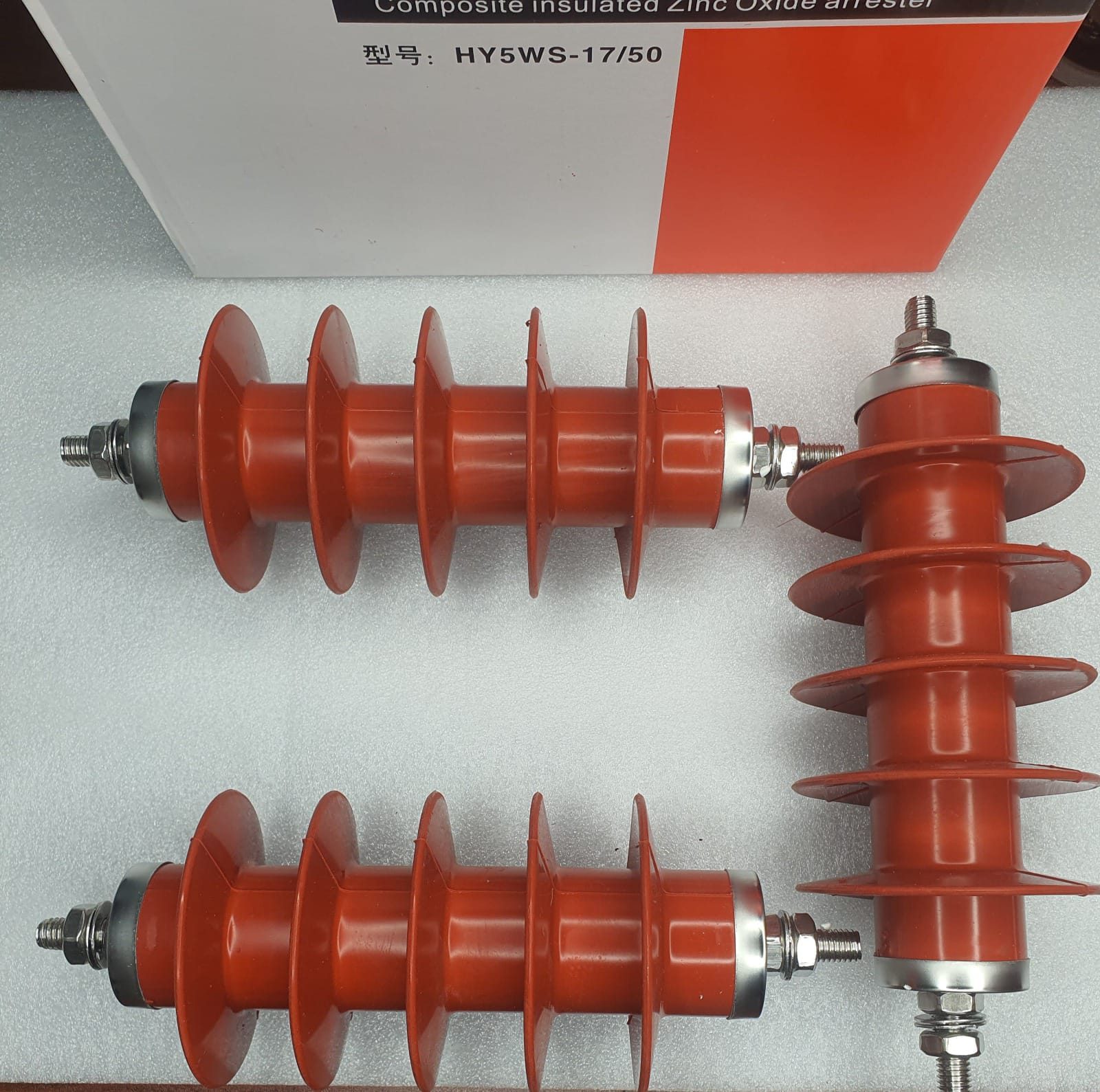
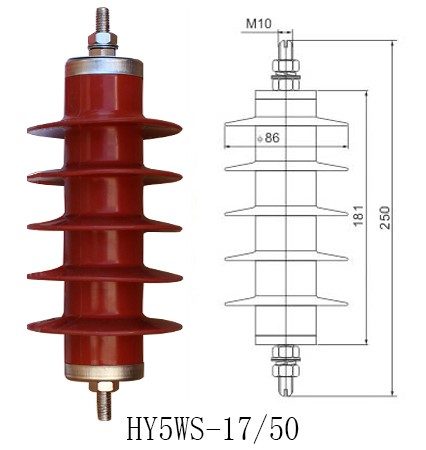
A second type of device is the zinc oxide surge arrester, such as the HY5WS-17/50. Inside its red composite housing is a stack of zinc oxide blocks. At normal voltage they do not conduct. When the voltage rises far above normal, they conduct heavily and pass the surge to earth, then stop conducting again once it has passed. One end is connected to the live fence wire and the other to earth.
Earthing is what makes either device work
A diverter or arrester can only send a surge where the earth lets it go. Three rules matter:
- Give the lightning protection its own earth. Do not share the energizer’s earth rods. If you do, the surge you diverted arrives at the energizer through its earth terminal instead.
- Keep the two earths apart. Separate the lightning earth and the energizer earth by several metres, and keep both away from the building’s electrical earth.
- Use proper rods. Copper earth rods driven into ground that stays moist give a far lower resistance than short galvanized pegs.
Protecting the mains side
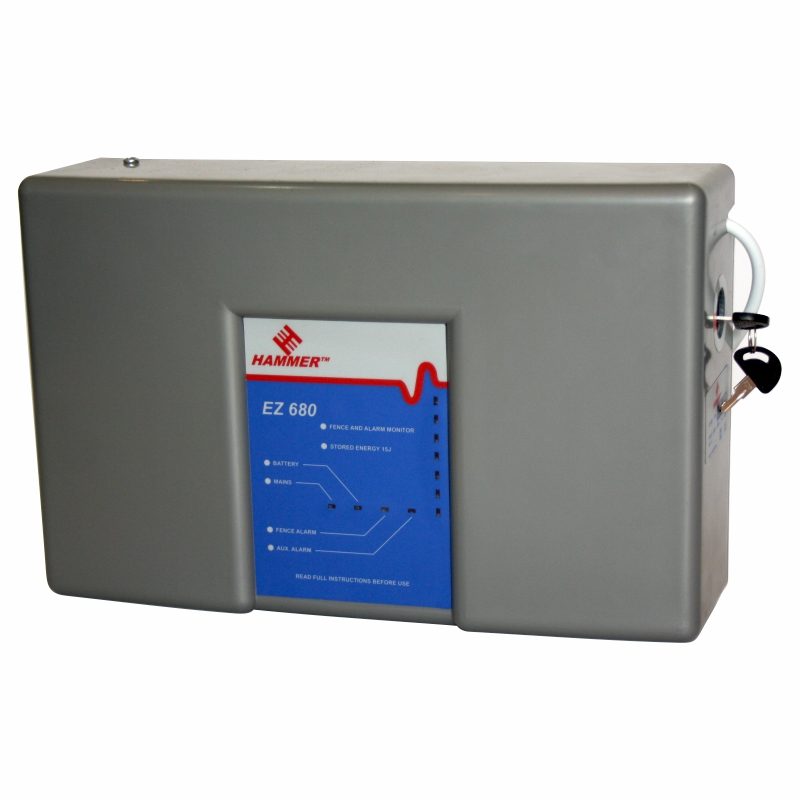
Fit a surge protector, such as the Hammer energizer surge protector, on the power supply to the energizer as well. Many modern energizers also have surge protection built in. Treat that as a last line of defence, not a replacement for a diverter and a good earth.
What protection cannot do
No device guarantees an energizer will survive a direct strike. What diverters and arresters do is absorb the far more common nearby strikes and induced surges, and reduce the damage when a big one arrives. After a severe storm, check the fence voltage and inspect the diverter. A diverter that has taken a heavy strike may need replacing.
Checklist
- Diverter or arrester on the live line, close to where the fence leaves the energizer.
- A separate earth for it, with copper rods.
- Surge protection on the mains supply.
- A voltage check after every major storm.
Diverters, earth rods and energizers are stocked in the electric fencing section of Patsec Security Store.