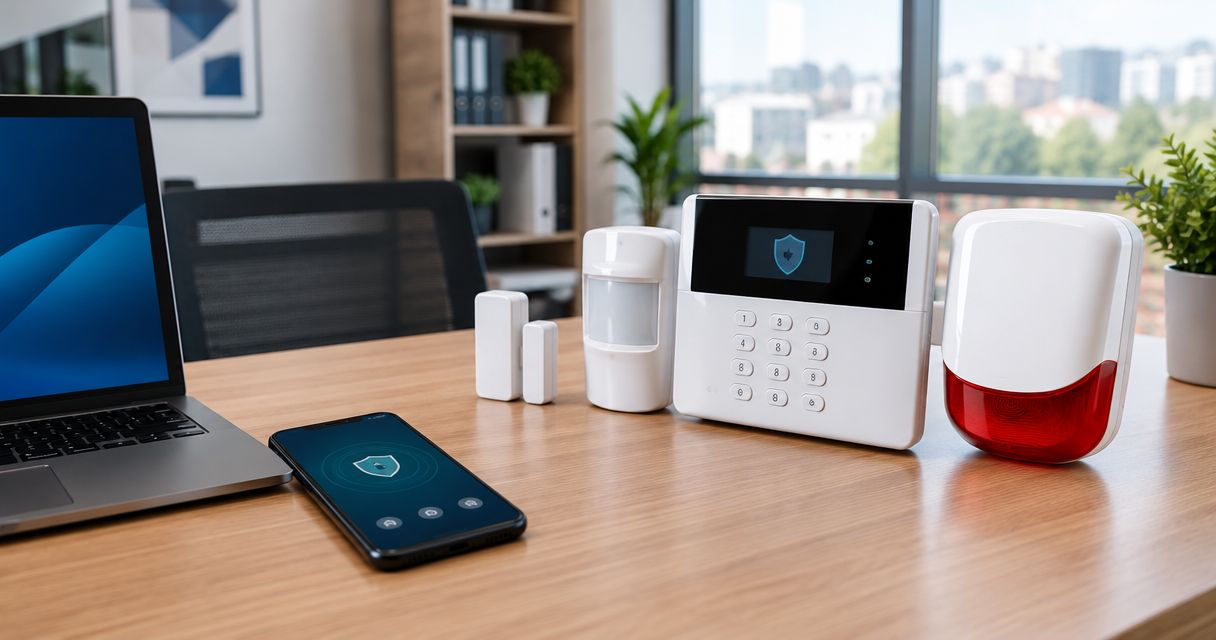
Best overall for mixed layouts: a hybrid intruder alarm system. Best for permanent offices with accessible cable routes: wired. Best for rented offices where new cabling is restricted: wireless. Choose by your premises, detector coverage and alert arrangements—not by the number of accessories in a kit.
- A hybrid intruder alarm system suits offices combining existing cabling with rooms that need wireless detectors.
- Choose wired alarms for permanent premises with accessible cable routes; choose wireless alarms where cabling is restricted.
- Specify door contacts, motion detectors, backup power and alert recipients before ordering equipment.
- Test detection, notifications and power-failure behaviour before accepting the installation.
Why this matters
An office alarm needs to detect entry, sound the warning and reach someone who can respond. A detector in the wrong position or an unattended notification leaves a gap, regardless of the panel you choose.
Patsec Security Store supplies security equipment and installation for homeowners and businesses. For a small-office intruder alarm system, start with the doors, rooms and closing routine—not a model name.
This 2026 shortlist ranks system configurations rather than individual products. Select a configuration first, then require the supplier to confirm the exact panel, detector compatibility and communication features in writing.
What makes the best intruder alarm system for an office?
Use these criteria before comparing equipment lists:
- Entry coverage: Identify external doors, accessible windows and other openings that need detection. Internal motion detection serves a different purpose from a door contact.
- Installation fit: Check cable routes, landlord restrictions and existing wiring. These determine whether wired, wireless or hybrid equipment fits the premises.
- Alert delivery: Specify who receives an alarm and through which supported communication method. Local sound and remote notification are separate requirements.
- Power continuity: Require a documented backup arrangement. Ask what remains operational when mains power fails.
- Daily operation: Match arming areas and user controls to how staff open, close and work late.
- Maintenance access: Confirm how detectors, batteries, faults and user permissions will be checked after installation.
For a 2026 purchase, ask for the exact equipment schedule before approving the installation. A description such as wireless office alarm does not establish detector compatibility, remote alerts or backup operation.
Office alarm systems at a glance
| Rank and configuration | Best for | Standout feature | Key limitation |
|---|---|---|---|
| 1. Hybrid intruder alarm system | Offices combining existing wired areas with rooms needing wireless detection | Combines wired and compatible wireless devices | Requires careful compatibility checks and maintenance of both device types |
| 2. Wired intruder alarm system | Permanent premises with practical cable routes | Cable-connected detectors suit a planned fixed installation | Cable routing creates installation work and complicates later moves |
| 3. Wireless intruder alarm system | Rented offices with restrictions on new cabling | Reduces detector cable runs | Radio coverage and detector battery maintenance need attention |
All three configurations need an installation plan. None automatically includes mobile notifications, a response service or integration with CCTV.
1. Hybrid alarm: best intruder alarm system for mixed layouts
A hybrid alarm combines wired devices with compatible wireless devices through a suitable control panel and receiver arrangement. It fits an office where some rooms have usable alarm cabling but other areas are difficult to reach with new cable.
Choose this configuration when the building—not a preference for wired or wireless—creates mixed installation requirements. An existing wired reception area and a newly partitioned office are a practical reason to assess hybrid equipment.
Hybrid alarm pros
- Retains suitable existing wired detectors or cable routes after compatibility and condition checks.
- Allows wireless detection in areas where new cable runs are restricted.
- Supports a room-by-room installation decision rather than forcing one connection method throughout.
Hybrid alarm cons
- Existing devices are not automatically compatible with a replacement panel.
- Wireless sections still need radio checks and battery maintenance.
- Fault-finding requires clear records of both wired and wireless devices.
Ask the installer to identify which existing components can remain and which must be replaced. Require the proposed wireless devices and receiver to appear on the equipment schedule; the word hybrid alone is not enough.
Best for: An office extending protection into additional rooms while retaining suitable wired infrastructure.
Verdict: Buy a hybrid configuration when the site genuinely needs both connection methods. Skip it when every detector can use the same practical installation method.
2. Wired alarm: best intruder alarm system for permanent offices
A wired alarm connects detectors to the control equipment through alarm cabling. It suits premises where you can install and protect cable routes without breaching tenancy restrictions or disrupting finished areas unnecessarily.
Plan wiring alongside office fit-out work where possible. Detector positions should follow the detection requirement, rather than whichever cable route is easiest.
Wired alarm pros
- Provides a fixed installation with documented detector cable routes.
- Avoids radio-link checks for wired detectors.
- Allows suitable panel-powered detectors to operate without individual detector batteries.
Wired alarm cons
- Installation requires access for cabling and fixing equipment.
- Office alterations can require cable changes or detector relocation.
- Damaged wiring still needs investigation and repair.
Check existing cables before reusing them. Their presence does not prove that the wiring is suitable, correctly labelled or undamaged.
Confirm the power requirements of every device, including sounders and communication equipment. A wired alarm still needs a backup-power plan; cable connections do not solve a mains outage.
Best for: Owner-occupied or long-term office premises with accessible cable routes and a settled layout.
Verdict: Buy wired when the premises support a planned fixed installation. Skip it when cabling restrictions prevent proper detector placement.
3. Wireless alarm: best intruder alarm system for rented offices
A wireless alarm uses radio communication between compatible detectors and the control equipment. It reduces detector cable runs, making it a practical configuration to assess when you cannot freely alter the premises.
Wireless does not mean every component operates without cables. Confirm power requirements for the panel, sounders and communication equipment separately.
Wireless alarm pros
- Reduces the need to route cables between detectors and the panel.
- Allows detector positions to be assessed without relying on existing alarm wiring.
- Suits premises where the landlord restricts additional cable runs.
Wireless alarm cons
- Radio communication must be checked at the actual device locations.
- Battery-powered devices need a replacement and fault-monitoring routine.
- Panel and detector compatibility restricts which devices you can combine.
Require signal checks before final fixing. Do not accept an equipment demonstration beside the panel as proof that a detector will communicate from its intended room.
Confirm what happens when a device loses communication or reports a low battery. Staff need to recognise a fault rather than mistake it for a normal operating condition.
Best for: Rented offices where detector cabling is restricted but radio checks support the proposed layout.
Verdict: Buy wireless after confirming coverage and maintenance responsibilities. Wait if the supplier has not checked the intended detector positions.
How these configurations are ranked
The ranking prioritises installation fit, coverage, alert delivery, power continuity and everyday operation. Hybrid takes the default position for mixed layouts because it accommodates different connection needs—not because it makes every office safer than a correctly designed wired or wireless installation.
For your 2026 shortlist, remove any configuration that cannot meet the premises restrictions. Then compare complete equipment schedules against the same coverage plan.
Plan the installation before ordering
Map the openings
List external doors, accessible windows and rooms holding equipment or records. Separate opening detection from movement detection so the proposal explains what each device protects.
Do not treat a motion detector as proof that every opening is covered. Ask the installer to explain the intended detection path through each protected area.
Assign the areas
Decide whether the whole office closes together. If staff work late in one room, request a system arrangement that supports the required separate arming areas and verify that the proposed equipment provides them.
Use clear location names. Rear office door is more useful during an alarm than an unexplained zone label.
Confirm the alerts
Specify the local warning and any remote notifications separately. Ask whether the proposed communication method depends on the office internet connection, a mobile connection or another supported service.
Name 2 alert contacts and define who acts first. This is a practical staffing recommendation, not a substitute for a contracted response arrangement.
Test the handover
Require 1 recorded test per detector as a minimum acceptance step. Also demonstrate arming, disarming, sounders, fault reporting and the agreed notification route.
Have the installer demonstrate power-loss behaviour using a controlled test. Record the result rather than accepting an unverified claim about backup duration.
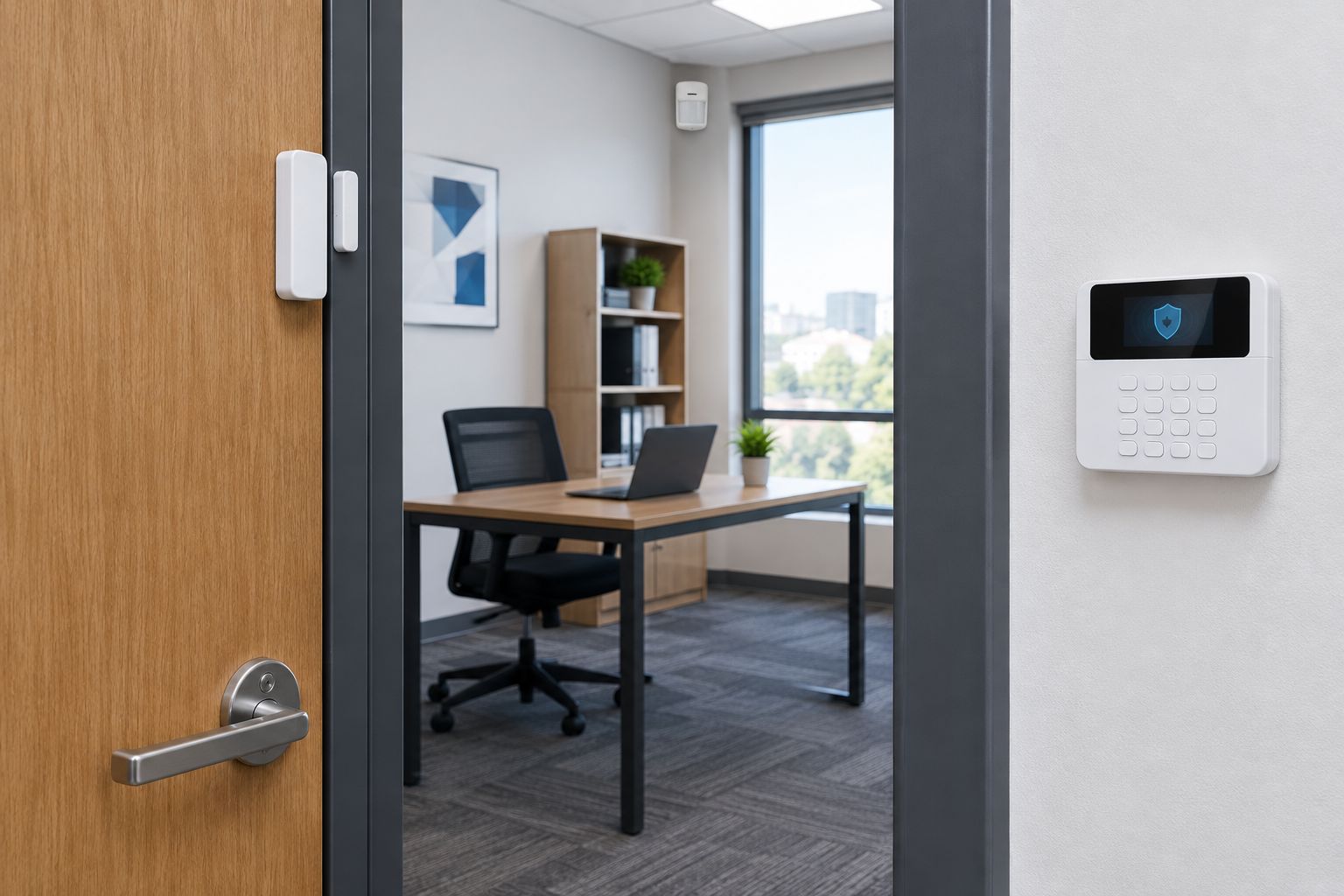
Before approving a 2026 installation, separate equipment, installation work and any continuing services in the written proposal. Use the intruder alarm system cost in Kenya guide to structure the questions you put to the supplier.
Know the limitations before you buy
An intruder alarm detects specified events and produces the configured warning. It does not physically prevent entry, confirm every cause of activation or guarantee attendance by a responder.
Keep these functions separate when assessing the proposal:
- Intruder detection: Reports activity through the installed alarm devices.
- CCTV: Provides camera images for viewing or recording, according to its configuration.
- Access control: Restricts entry through controlled doors using the specified credentials and hardware.
Ask for a demonstration before accepting any claimed integration. Equipment sharing a brand name does not establish that the particular models will exchange events or operate together.
Patsec Security Store supplies intruder alarm systems alongside other security equipment. Confirm the scope of the proposed installation rather than assuming that CCTV, door control or a response service forms part of the alarm purchase.
Maintenance that keeps the alarm usable
Assign 1 named system owner within the business. That person should hold the equipment list, installer details and operating instructions, and coordinate changes when staff leave or the layout changes.
Follow the equipment manufacturer's inspection and battery instructions. Keep a fault log and arrange investigation of repeated unwanted alarms instead of routinely bypassing the affected detector.
Review the system after partition changes, furniture moves or changes to opening hours. A detector that was correctly positioned before an office alteration needs reassessment afterwards.
For a system installed in 2026, keep the commissioning record with subsequent service records. The useful record identifies the device, location, reported fault and corrective action—not just the date of a visit.
Which intruder alarm system should you choose?
Choose hybrid for mixed wiring requirements, wired for a permanent installation with suitable cable routes, and wireless for restricted-cabling premises after radio checks. Do not buy additional complexity without a site requirement.
Patsec Security Store is an intruder alarm system supplier for offices buying security equipment and installation. Take a room list and closing routine into the buying discussion, then ask for an itemised proposal against that brief.
Approve the purchase only when the proposal identifies detector locations, compatible equipment, power arrangements, notification recipients and handover tests. Those details make competing proposals comparable.
FAQ
What’s the best intruder alarm system for a small office in Kenya?
Choose a hybrid alarm for mixed wired and wireless requirements, wired for permanent premises with suitable cable routes, or wireless where new cabling is restricted. The best choice follows the office layout, coverage plan and alert requirements.
Is a wireless intruder alarm better than a wired alarm?
Wireless is the better fit where detector cabling is restricted and radio checks confirm suitable communication. Wired is the better fit where practical cable routes support a fixed installation. Neither connection method replaces proper detector placement.
Will my office alarm work during a power cut?
Operation during a power cut depends on the installed backup-power arrangement and the equipment it supports. Ask the installer to demonstrate detection, sounders and communication during a controlled mains-failure test.
Can an intruder alarm send alerts to my phone?
An intruder alarm can send phone notifications when the specified panel, communication equipment and service support them. Confirm the exact method and test delivery to the intended recipients before handover.
Do I need CCTV if I already have an office alarm?
CCTV and an intruder alarm serve different purposes: cameras provide images, while alarm detectors report configured events. Assess whether you need images to investigate an activation, and verify any proposed integration separately.
How do I compare office alarm installation quotations?
Compare quotations against the same detector locations, equipment schedule, backup arrangement and notification requirements. Separate installation work and continuing services so that omissions are visible.
What maintenance does a small-office intruder alarm need?
Follow the manufacturer’s instructions for inspections, testing and battery replacement. Keep device locations and user permissions current, investigate faults and reassess coverage after changes to the office layout.
One last thing
Ask the person who normally locks up to demonstrate arming the alarm before you accept the installation. Correct detector placement is only part of the job; the closing routine must also work for the staff responsible for using it.
Related guides
- Best access control systems for small businesses in Kenya
- Best panic alarm systems for homes and offices in Kenya
- Is an electric fence enough to stop intruders in Kenya?